Knowledge
Hydraulic Cylinders in Heavy-Load Automation: Designing for High Force and Long Service Life
2026/ 02/ 13
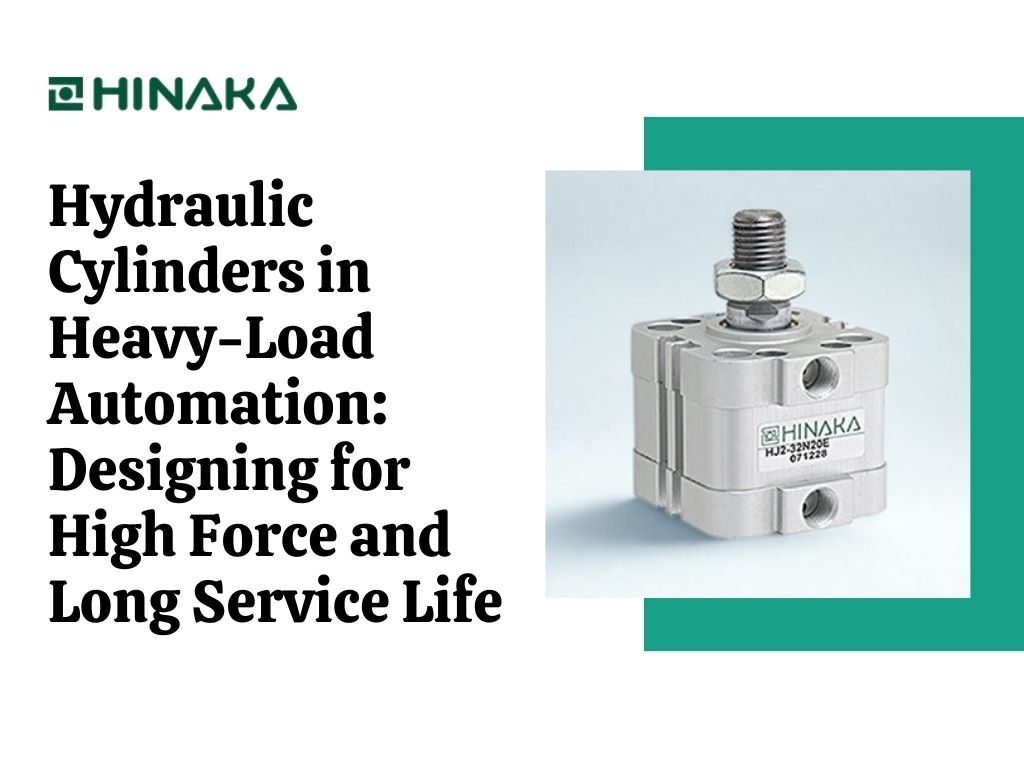
In modern industrial automation, many systems are no longer limited to light-duty positioning or handling. Heavy-load automation—such as steel processing lines, large transfer systems, heavy fixture clamping, and press equipment—requires motion components that can deliver extremely high force while maintaining stability and repeatability. Among all linear actuation technologies, hydraulic cylinders remain one of the most reliable solutions for these demanding applications.
However, using hydraulic cylinders in heavy-load automation is not simply a matter of choosing a larger bore size. Proper engineering design must consider structure strength, sealing performance, side-load control, heat management, and long-term wear behavior. A well-designed hydraulic cylinder system can operate for millions of cycles, while an underspecified one may fail prematurely.
At HINAKA, hydraulic cylinders for heavy-load automation are engineered with durability, safety margin, and service life in mind. This article explains how hydraulic cylinders should be designed and selected for high-force, long-life industrial automation systems.
Why Hydraulic Cylinders Are Ideal for Heavy-Load Automation
Heavy-load automation systems often demand:
- Very high output force
- Stable motion under load
- Continuous duty cycles
- Resistance to shock and overload
- Long service intervals
Hydraulic cylinders are especially suitable for these requirements because hydraulic systems can generate high force from relatively compact actuator sizes. Compared with pneumatic or electric linear actuators, hydraulic cylinders provide:
- Higher force density
- Better overload tolerance
- Smoother force output under heavy load
- Stronger structural rigidity
This makes them widely used in heavy-duty automation cells and industrial machinery.
Structural Design for High Force Output
When hydraulic cylinders are used for high-force automation, structural strength is the first priority. The cylinder tube, end caps, and piston rod must all be designed with sufficient safety factors relative to maximum working pressure.
Key structural considerations include:
- Thick-wall cylinder tubes for high pressure resistance
- High-strength steel end caps and mounting bases
- Precision fastening structures
- Reinforced rod diameters to prevent bending
Proper stress distribution in the cylinder body reduces fatigue risk and improves long-term reliability under repeated heavy loading.
Piston Rod Strength and Surface Treatment
In heavy-load automation, the piston rod is often exposed to both axial force and side load. Rod bending and surface wear are two common failure causes.
To ensure long service life, heavy-duty hydraulic cylinders typically use:
- High-strength carbon steel rods such as S45C
- Hard chrome plated rod surfaces
- Precision grinding and polishing
- Adequate rod diameter sizing
Surface treatment directly affects seal life and friction stability.
Seal System Design for Long Service Life
Seal performance becomes more critical as load and pressure increase. Under heavy loads, pressure peaks and temperature rise accelerate seal wear.
A long-life hydraulic cylinder seal system should include:
- Pressure-rated primary seals
- Anti-extrusion backup rings
- Wear-resistant guide rings
- Stable groove tolerances
Seal selection must match pressure level, temperature range, and duty cycle.
Managing Side Load and Alignment
Heavy-load automation rarely produces perfectly centered forces. Misalignment and frame deflection introduce side loads to the rod.
Without proper control, this leads to:
- Guide bushing wear
- Rod scoring
- Seal damage
- Increased friction and heat
Engineering solutions include reinforced guide bushings, longer bearing lengths, guided structures, and proper mounting geometry.
Heat and Duty Cycle Considerations
High-force automation often involves frequent cycles or long holding times under pressure, generating heat in both oil and components.
Designers should evaluate:
- Duty cycle percentage
- Oil temperature range
- Seal temperature limits
- Lubrication conditions
Hydraulic circuit design also plays a key role in cylinder longevity.
Hydraulic Cylinder Series for Heavy-Load Automation at HINAKA
HINAKA provides multiple hydraulic cylinder series suitable for high-force automation environments.
15B Series (JIS Standard, 14 MPa)
Robust JIS-standard cylinders with steel construction, honed or SUS304 tubes, and hard-chrome plated S45C piston rods.
5H Series (JIS Standard, 5 MPa)
Medium-pressure heavy-duty cylinders with durable steel structures and precision rod treatment.
HJ2 Series (Compact, 3.5 MPa)
Compact hydraulic cylinders for space-limited automation systems requiring reliable hydraulic force.
These series support clamping systems, transfer units, presses, and heavy fixture actuation.
Best Practices for Long Hydraulic Cylinder Service Life
Recommended practices include:
- Selecting adequate safety margins
- Avoiding continuous max-pressure operation
- Ensuring correct mounting alignment
- Maintaining oil cleanliness and filtration
- Performing periodic seal inspections
Preventive maintenance greatly reduces lifecycle cost.
Frequently Asked Questions (FAQ)
Q1: Are hydraulic cylinders better than electric actuators for heavy loads?
For very high force applications, hydraulic cylinders typically provide higher force density and overload tolerance than electric actuators.
Q2: How much safety factor should be used in heavy-load cylinder selection?
Engineering practice commonly applies a safety factor above maximum working pressure and load, depending on duty cycle and risk level.
Q3: What causes premature hydraulic cylinder failure in heavy automation?
Common causes include misalignment, side load, poor sealing design, contamination, and undersized rod diameter.
Q4: How important is rod surface finish for cylinder life?
Very important. Poor surface finish increases seal wear and leakage risk. Hard chrome plating and precision grinding are standard for durability.
Q5: Can heavy-load hydraulic cylinders be customized?
Yes. Bore size, rod diameter, mounting style, stroke length, and seal packages are often customized for heavy automation systems.
Conclusion
Hydraulic cylinders are a core component in heavy-load automation because they deliver high force, rigidity, and overload tolerance. Achieving long service life requires careful attention to structure design, rod strength, sealing systems, alignment, and duty cycle.
With multiple JIS-standard and compact hydraulic cylinder series, HINAKA supports heavy-load automation with reliable and durable cylinder solutions.
If you are designing a high-force automation system or upgrading an existing machine, you are welcome to contact HINAKA for technical discussion and cylinder selection support. Our engineering team can help evaluate your load conditions, duty cycle, and installation requirements to recommend a suitable hydraulic cylinder configuration.
Recent Article
- Hydraulic Cylinder Maintenance Guide: Preventing Leaks, Corrosion, and Seal Failure
- Key Factors When Selecting High Force Pneumatic Cylinders for Automation Systems
- The Role of Hydraulic Cylinders in Precision Manufacturing and Robotics
- Comparing Air Hydraulic Unclamping Cylinders and Mechanical Clamping Systems
- Selecting Hydraulic Cylinders for Mobile Machinery: Shock, Vibration, and Contamination Challenges