Knowledge
Compact Pneumatic Cylinders for Space-Saving Machine Design: Key Features & Applications
2025/ 12/ 18
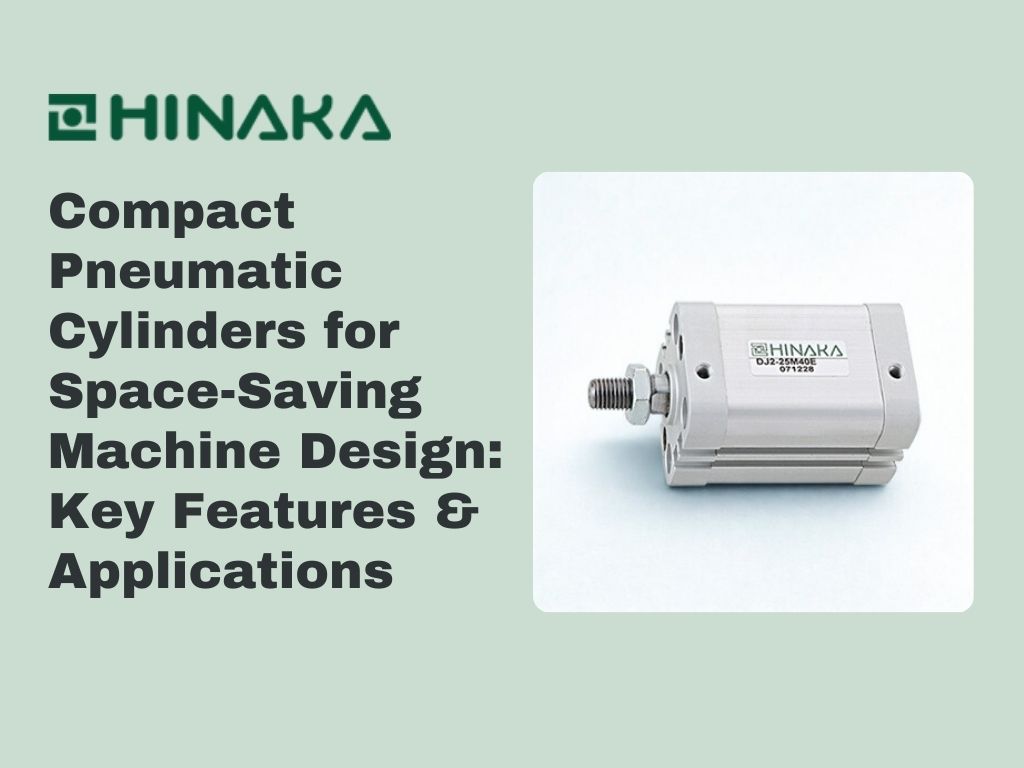
As industrial equipment continues to evolve toward higher efficiency, faster cycle times, and greater system integration, machine designers face increasing pressure to reduce overall machine footprint without compromising performance or reliability. In this context, compact pneumatic cylinders have become an essential solution for space-saving machine design—particularly in automated production lines where installation space is limited.
Compared with standard pneumatic cylinders, compact pneumatic cylinders offer shorter body lengths, flexible mounting options, and high force density. These advantages make them well suited for modern machinery across a wide range of industries that demand compact layouts without sacrificing functionality.
At HINAKA, we design and manufacture compact pneumatic cylinders that balance space efficiency, durability, and precision, helping equipment builders achieve optimized machine layouts even in the most constrained environments.
What Is a Compact Pneumatic Cylinder?
A compact pneumatic cylinder is a type of air-driven linear actuator engineered with a reduced overall length while maintaining sufficient output force and stroke capability. This compact form factor is typically achieved by optimizing internal structures, minimizing end-cap thickness, and incorporating integrated mounting designs.
Compact pneumatic cylinders are commonly used when:
- Machine installation space is limited
- Multiple actuators must be arranged in close proximity
- Short strokes with high repeatability are required
- Equipment design prioritizes modularity and clean layouts
Despite their smaller size, compact pneumatic cylinders are designed to deliver reliable performance comparable to larger standard cylinders when properly selected and applied.
Key Design Features of Compact Pneumatic Cylinders
1. Reduced Overall Length
By minimizing the distance between mounting surfaces, compact pneumatic cylinders allow designers to reduce machine depth and height. This is especially valuable in multi-station automation systems and compact equipment layouts where space efficiency is critical.
2. High Force Density in a Compact Form
Optimized piston geometry enables compact pneumatic cylinders to generate sufficient thrust for clamping, pushing, and positioning operations—even with short stroke lengths.
3. Flexible Mounting Options
Multiple mounting configurations simplify integration into tight machine frames and reduce the need for additional brackets or adapters, helping streamline overall machine design.
4. Short-Stroke Precision and Motion Stability
Proper internal guidance and seal design ensure stable, repeatable motion, making compact pneumatic cylinders suitable for precision automation tasks.
5. Simplified Installation and Maintenance
Standardized structures and modular internal designs reduce installation complexity, shorten maintenance time, and help minimize unplanned downtime.
Applications of Compact Pneumatic Cylinders
1. Automated Assembly Machines
In assembly equipment, space is often constrained by the need to integrate sensors, tooling, and safety components. Compact pneumatic cylinders are widely used for:
- Component insertion
- Light pressing operations
- Positioning and indexing tasks
Their small footprint allows multiple actuators to be placed close together, increasing machine functionality without increasing overall machine size.
2. Packaging and Labeling Equipment
Packaging machines demand fast cycle times and compact layouts. Compact pneumatic cylinders are ideal for:
- Carton forming
- Product pushing and alignment
- Label application mechanisms
Their short stroke capability and rapid response support high-speed operation while keeping machine dimensions minimal.
3. Electronics and Semiconductor Equipment
In electronics manufacturing, equipment often requires precise motion within confined spaces. Compact pneumatic cylinders are commonly used in:
- PCB handling systems
- Pick-and-place assist mechanisms
- Inspection and testing fixtures
Their stable motion characteristics and compact design help maintain accuracy without introducing unnecessary bulk.
4. Material Handling and Conveying Systems
Compact pneumatic cylinders are frequently integrated into conveyors and transfer units for:
- Stopper mechanisms
- Sorting gates
- Positioning devices
Their space-efficient design enables seamless integration into narrow conveyor frames or modular material handling systems.
5. Medical and Laboratory Automation
Medical and laboratory equipment emphasizes cleanliness, reliability, and compact system design. Compact pneumatic cylinders are used for:
- Sample handling systems
- Automated doors or covers
- Linear actuation in diagnostic equipment
When combined with appropriate materials and sealing options, they meet both spatial constraints and operational requirements.
Design Considerations When Selecting a Compact Pneumatic Cylinder
Before selecting a compact pneumatic cylinder, engineers should carefully evaluate:
- Required output force and stroke length
- Available installation space and mounting orientation
- Operating pressure and air supply stability
- Cycle frequency and expected service life
- Environmental conditions such as dust, moisture, or temperature
Proper selection is essential to ensure reliable performance and prevent premature wear.
HINAKA Compact Pneumatic Cylinders: Engineered for Space-Constrained Automation
HINAKA’s Compact Pneumatic Cylinders – DJ2 Series are engineered specifically for applications where installation space is limited but performance and reliability remain critical.
Key features of the DJ2 Series include:
- Wear-resistant anodized aluminum alloy cylinder tubes with approximately 25 µm coating thickness
- Reinforced piston and bushing structure designed to improve stability under radial loads
- Built-in magnetic sensor compatibility for automation feedback and position detection
- Modular internal design that allows easier seal replacement and simplified maintenance
- Multiple bore sizes and stroke options for flexible machine integration
- Compatibility with standard industrial compressed air systems
These characteristics make the DJ2 Series well suited for automation equipment, electronics manufacturing, packaging machinery, and other space-constrained applications.
Frequently Asked Questions (FAQ)
Q1: What is the main difference between a compact pneumatic cylinder and a standard pneumatic cylinder?
A compact pneumatic cylinder is designed with a shorter overall body length, allowing installation in space-constrained machine layouts. While standard cylinders are suitable for general applications, compact cylinders provide similar output force and stability in a much smaller footprint, making them ideal for dense automation systems.
Q2: Are compact pneumatic cylinders suitable for high-cycle or continuous operation?
Yes. When properly selected and installed, compact pneumatic cylinders can handle high-cycle operation. Features such as wear-resistant cylinder tubes, reinforced bushings, and low-friction seals—such as those used in HINAKA’s DJ2 Series—help ensure long service life even in repetitive automation tasks.
Q3: How do I select the correct bore size for a compact pneumatic cylinder?
Bore size should be selected based on the required output force, operating pressure, and stroke length. Engineers should calculate the theoretical force and include a safety margin, particularly for applications involving side loads or frequent cycling.
Conclusion
As machinery continues to trend toward more compact and highly integrated designs, compact pneumatic cylinders play a critical role in enabling efficient automation without sacrificing performance. By combining reduced size, stable motion control, and flexible installation options, they help manufacturers optimize machine layouts and improve long-term operational reliability.
With extensive experience in pneumatic cylinder engineering, HINAKA provides compact pneumatic cylinder solutions that support modern automation needs across a wide range of industries.
Recent Article
- Hydraulic Cylinder Maintenance Guide: Preventing Leaks, Corrosion, and Seal Failure
- Key Factors When Selecting High Force Pneumatic Cylinders for Automation Systems
- The Role of Hydraulic Cylinders in Precision Manufacturing and Robotics
- Comparing Air Hydraulic Unclamping Cylinders and Mechanical Clamping Systems
- Hydraulic Cylinders in Heavy-Load Automation: Designing for High Force and Long Service Life