Knowledge
The Role of Hydraulic Cylinders in Precision Manufacturing and Robotics
2026/ 04/ 08
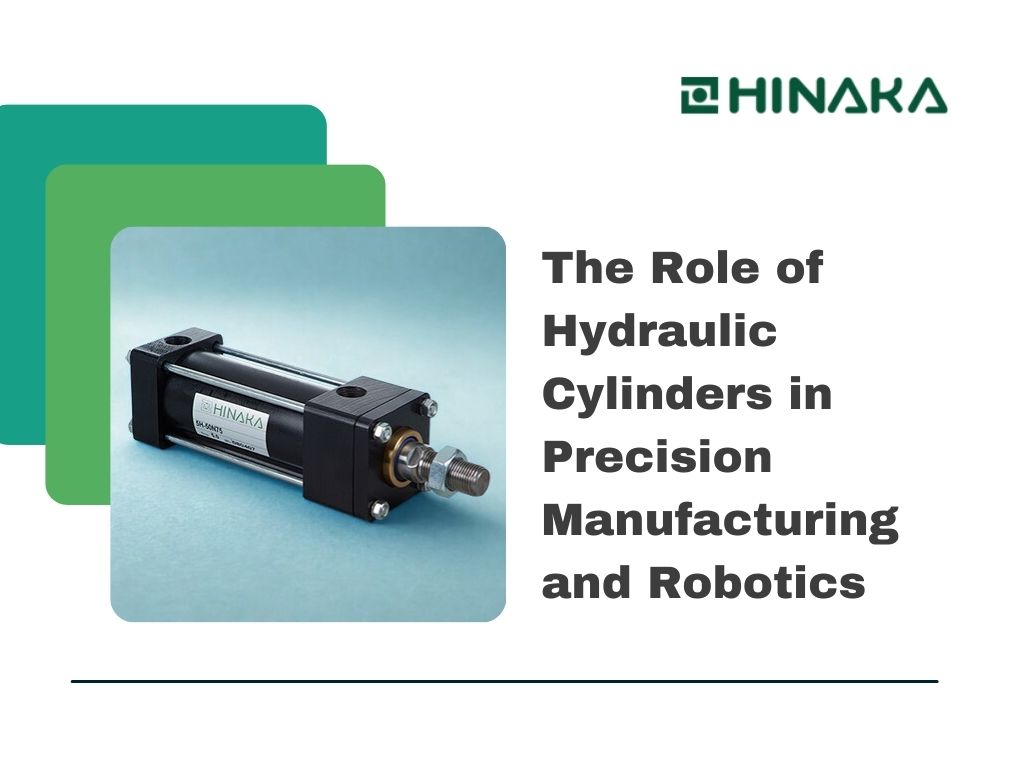
As manufacturing industries continue to evolve toward automation, precision, and high efficiency, the demand for reliable motion control technologies has increased significantly. Among the various actuation solutions available today, hydraulic cylinders remain one of the most important components used in precision manufacturing equipment and industrial robotics systems.
Hydraulic cylinders are widely recognized for their ability to deliver high force output, stable motion control, and durability under demanding operating conditions. These characteristics make them ideal for applications that require precise positioning, consistent clamping force, or controlled movement of heavy components.
For manufacturers seeking to improve automation performance, understanding how hydraulic cylinders support precision manufacturing and robotics systems is essential.
Hydraulic Cylinders: A Core Technology in Precision Automation
A hydraulic cylinder is a mechanical actuator that converts hydraulic energy (fluid pressure) into linear motion and force. It typically consists of several key components, including the cylinder barrel, piston, piston rod, hydraulic seals, end caps, and fluid ports.
When pressurized hydraulic fluid enters the cylinder, it pushes the piston inside the barrel. This movement drives the piston rod outward or inward, producing controlled linear motion.
Because hydraulic systems operate under high pressure, hydraulic cylinders can generate significantly higher force compared with pneumatic systems of similar size. This capability makes them indispensable in many precision manufacturing processes where strong and stable motion control is required.
How Hydraulic Power Enables High-Precision Manufacturing
Precision manufacturing environments require equipment capable of delivering repeatable motion, stable force, and consistent performance. Hydraulic cylinders play an important role in achieving these requirements.
High Clamping Force for Machining Stability
During machining operations, workpieces must remain completely stable to maintain dimensional accuracy and surface finish. Hydraulic cylinders provide powerful clamping force that helps secure fixtures, tooling, and workholding systems.
This makes them widely used in:
-
Machine tool clamping systems
-
Workholding fixtures
-
Press machines
-
Tool locking mechanisms
Smooth and Controlled Motion
Hydraulic systems allow engineers to control speed, pressure, and position precisely. By regulating hydraulic flow and pressure, manufacturers can achieve stable motion profiles that support high-precision machining processes.
This stability reduces vibration and improves machining consistency.
Reliable Performance in Continuous Production
Precision manufacturing equipment often runs continuously for extended periods. Hydraulic cylinders are designed to withstand high loads, repetitive motion cycles, and demanding industrial environments, making them suitable for long-term operation.
With proper sealing and maintenance, hydraulic cylinders can maintain reliable performance for years.
Why Robotics Systems Still Depend on Hydraulic Actuation
Although many robotic systems use electric actuators, hydraulic cylinders remain essential in robotics applications that require high power density and strong force output.
Heavy-Duty Robotic Gripping
Hydraulic cylinders are often integrated into robotic end effectors to provide strong gripping force. This is particularly useful when handling heavy components such as:
-
Automotive parts
-
Metal castings
-
Industrial machinery components
The strong clamping force ensures stable handling during automated operations.
Robotic Press and Forming Operations
In robotic manufacturing cells, hydraulic cylinders are frequently used in pressing or forming systems. These applications require controlled force application combined with precise movement.
Hydraulic actuation allows robots to perform these tasks consistently while maintaining accurate force control.
Automated Assembly Systems
Many automated assembly lines rely on hydraulic cylinders to position components, secure parts, or drive assembly mechanisms. Their consistent force output ensures stable and repeatable assembly processes.
Comparing Hydraulic, Pneumatic, and Electric Motion Systems
Manufacturers often evaluate different actuation technologies when designing automated machinery.
Hydraulic cylinders provide extremely high force output and are commonly used in heavy machinery, robotics, and machine tool systems.
Pneumatic cylinders generate moderate force and are typically used in lighter automation equipment such as packaging machinery.
Electric actuators offer very precise positioning and are commonly used in robotic arms or positioning systems, but they generally produce lower force levels compared with hydraulic systems.
For applications requiring high load capacity and consistent clamping force, hydraulic cylinders remain the most effective solution.
Engineering Considerations When Selecting Hydraulic Cylinders
Selecting the correct hydraulic cylinder requires careful evaluation of several technical factors.
Cylinder Size and Force Requirements
The cylinder bore size determines the amount of force generated by hydraulic pressure. Engineers must ensure that the selected cylinder provides sufficient force for the application.
Stroke Length
The stroke length defines how far the piston rod travels during operation. The correct stroke must match the required movement range of the machine or robotic system.
Sealing and Fluid Compatibility
High-quality seals are critical for preventing hydraulic fluid leakage and protecting the system from contamination. Proper sealing ensures consistent performance in precision manufacturing environments.
Structural Strength and Rigidity
Hydraulic cylinders used in precision machinery must maintain structural stability under heavy loads. Strong materials and precise machining are necessary to ensure long-term reliability.
HINAKA Hydraulic Technologies for Automated Machinery
HINAKA develops hydraulic components designed for machine tools and automated manufacturing equipment. With extensive experience in hydraulic engineering, HINAKA solutions support reliable clamping performance, controlled motion, and efficient automation.
HINAKA hydraulic cylinders are engineered to provide:
-
Stable and consistent force output
-
Durable construction for industrial environments
-
Reliable performance in automated production systems
These characteristics make hydraulic cylinders an essential component in modern manufacturing and robotics applications.
Frequently Asked Questions About Hydraulic Cylinders
Why are hydraulic cylinders widely used in manufacturing equipment?
Hydraulic cylinders provide strong force output, stable motion control, and reliable performance, making them ideal for applications that require powerful clamping or controlled linear movement.
Are hydraulic cylinders commonly used in robotics systems?
Yes. Hydraulic cylinders are often used in robotics applications involving heavy loads, pressing operations, or high-force gripping tasks.
How do hydraulic cylinders differ from pneumatic cylinders?
Hydraulic cylinders operate using pressurized fluid and can generate significantly higher force, while pneumatic cylinders use compressed air and are generally used for lighter applications.
What industries use hydraulic cylinders most frequently?
Hydraulic cylinders are widely used in machine tools, automotive manufacturing, robotics systems, heavy machinery, and industrial automation equipment.
Final Thoughts on Hydraulic Actuation in Modern Automation
Hydraulic cylinders continue to play a critical role in precision manufacturing and robotics. Their ability to deliver high force, stable motion, and long-term reliability makes them indispensable in many industrial automation systems.
As manufacturing technologies continue to advance, hydraulic actuation will remain an important solution for applications that require both strength and precision.
If you are evaluating motion control solutions for automated machinery or precision manufacturing equipment, HINAKA provides hydraulic technologies designed to support stable and efficient industrial operations.
For more information or technical consultation, manufacturers are welcome to contact the HINAKA team.
Recent Article
- Hydraulic Cylinder Maintenance Guide: Preventing Leaks, Corrosion, and Seal Failure
- Key Factors When Selecting High Force Pneumatic Cylinders for Automation Systems
- Comparing Air Hydraulic Unclamping Cylinders and Mechanical Clamping Systems
- Hydraulic Cylinders in Heavy-Load Automation: Designing for High Force and Long Service Life
- Selecting Hydraulic Cylinders for Mobile Machinery: Shock, Vibration, and Contamination Challenges