Knowledge
Choosing the Right Pneumatic Cylinder for Harsh Environments: Materials, Seals, and Design Factors
2025/ 11/ 25
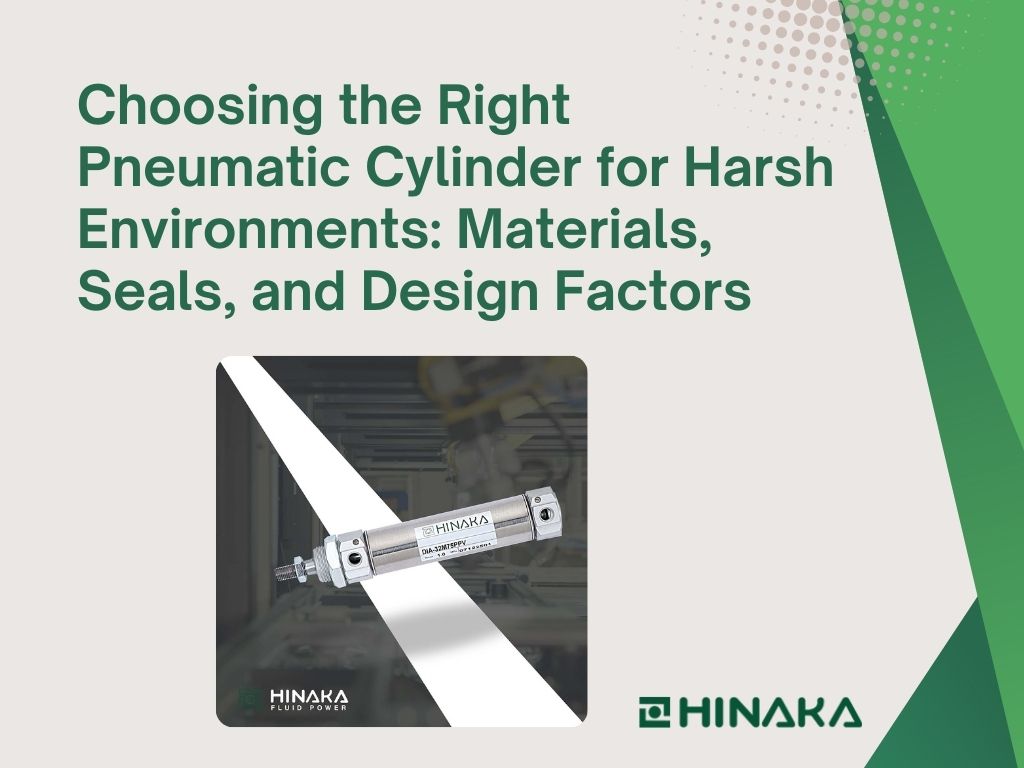
In industrial automation, pneumatic cylinders are one of the most reliable and cost-effective linear motion solutions. However, not all operating environments are created equal. High humidity, dust, extreme temperatures, corrosive chemicals, and heavy washdowns can all shorten the lifespan of standard pneumatic components. For manufacturers that operate equipment in demanding conditions, selecting the right pneumatic cylinder design and material is essential to maintaining productivity and avoiding unplanned downtime.
At HINAKA, we engineer pneumatic cylinder solutions specifically for harsh industrial environments—food processing, chemical plants, marine systems, steel equipment, and fast-paced automation lines. This article explores how to properly choose pneumatic cylinders that remain durable and stable where standard products fail.
1. Understanding Harsh Industrial Conditions
| Challenge | Common Industry Scenarios | How It Damages Cylinders |
|---|---|---|
| Moisture / Washdowns | Food & beverage, outdoor | Corrosion, seal swelling, lubrication loss |
| Abrasive dust | Metalworking, timber | Seal wear, scoring on rods & tubes |
| Chemical exposure | Pharmaceutical, plating | Seal deterioration, surface erosion |
| Extreme heat or freezing | Foundry / cold storage | Seal cracking, loss of elasticity |
| Vibration / shock | Mobile equipment | Premature bearing failure |
2. Material Selection for Strength and Corrosion Protection
| Component | Best Option for Harsh Conditions | Benefit |
|---|---|---|
| Cylinder tube | SUS304 / SUS316 | Superior rust & chemical resistance |
| Piston rod | Hard chrome plating or stainless | Prevents abrasive wear |
| End caps | Hard-anodized aluminum or stainless | Lightweight + corrosion resistance |
| Fasteners | Stainless bolts | No rust contamination |
SUS316 is recommended for aggressive chemical and salt-rich applications.
3. Sealing Technology That Ensures Lifelong Performance
| Seal Material | Ideal for | Advantages |
|---|---|---|
| FKM (Viton®) | High-temp / chemical use | Long life in tough conditions |
| EPDM | Washdown & sterilization | Moisture and cleaning chemical resistance |
| PTFE | Abrasive environments | Low friction and tough sliding durability |
Rod scrapers and wiper seals are essential for dusty environments.
4. Design Enhancements for Heavy-Duty Durability
- Hard-anodized cylinder tubes
- Nickel-plated or stainless end caps
- Reinforced wear-resistant rod guides
- High-temperature lubrication
- Sensor grooves for motion detection
These help reduce fatigue, stick-slip and unwanted downtime.
5. Application Examples
| Industry | Harsh Condition | Recommended Cylinder Type |
|---|---|---|
| Food & Beverage | Wet environment + CIP cleaning | Stainless steel cylinders + EPDM seals |
| Steel & Foundry | High heat, sparks | Heat-resistant seals + dust scrapers |
| Marine / Offshore | Salt corrosion | Full SUS316 design |
| Chemical plants | Acid and solvent vapors | FKM/PTFE seals |
| Logistics automation | Fast cycle + dust | Hardened rods + guided cylinders |
6. Engineering-Based Pneumatic Cylinder Selection Guide
This section is sourced from HINAKA’s official selection guide for pneumatic cylinders:
To properly select a cylinder for harsh environments, engineers should evaluate:
| Step | Key Decision | Notes |
|---|---|---|
| 1. Pressure Source (MPa) | Ensure supply pressure supports required force | Pressure defines output capability |
| 2. Actuator Type | Single / double acting | Double-acting preferred for harsh environments |
| 3. Function | Cushions / no cushions / sensors | Cushions reduce noise & wear; sensors enable automation feedback |
| 4. Environment | Climate, corrosion, vibration | Select protective accessories and materials accordingly |
| 5. Mounting Space | FA / CB / TC / LB | Choose based on machine footprint and motion axis |
| 6. Required Force | Based on bore + rod size + pressure | Use HINAKA theoretical output charts |
| 7. Air Consumption / Flow | Check compressor capacity | Ensure enough intake & exhaust for speed control |
This selection flow ensures correct cylinder performance and optimized lifetime cost.
Why HINAKA Pneumatic Cylinders Are Designed for Harsh Environments
HINAKA pneumatic cylinders comply with ISO 6431, ISO 6432, and ISO 15552, ensuring global compatibility and installation flexibility.
Our core engineering strengths:
- Corrosion-resistant aluminum alloy or stainless steel tubes
- Pre-lubricated, low-friction bearings and seals to extend life
- Adjustable cushions reduce shock and improve durability
- Positioning accuracy up to 0.01 mm
- Full lineup: tie-rod, compact, round-body, guided cylinders
- Fully customizable strokes and mounting styles
We are committed to ensuring reliable performance under the toughest industrial demands.
Conclusion
When a pneumatic cylinder must survive corrosion, heat, dust, or mechanical stress, selecting the proper construction is critical. By applying a structured engineering guide and choosing durable materials and seal technologies, manufacturers can ensure quality products and reduce long-term maintenance costs.
With decades of experience serving global industrial markets, HINAKA delivers pneumatic cylinder solutions that optimize safety, performance, and uptime in harsh environments.
Contact HINAKA for Technical Support
Our engineering team can help you evaluate your working environment and select the right pneumatic cylinder configuration.
Contact us: https://www.hinakaorg.com/en-US/contact
Recent Article
- Hydraulic Cylinder Maintenance Guide: Preventing Leaks, Corrosion, and Seal Failure
- Key Factors When Selecting High Force Pneumatic Cylinders for Automation Systems
- The Role of Hydraulic Cylinders in Precision Manufacturing and Robotics
- Comparing Air Hydraulic Unclamping Cylinders and Mechanical Clamping Systems
- Hydraulic Cylinders in Heavy-Load Automation: Designing for High Force and Long Service Life