Knowledge
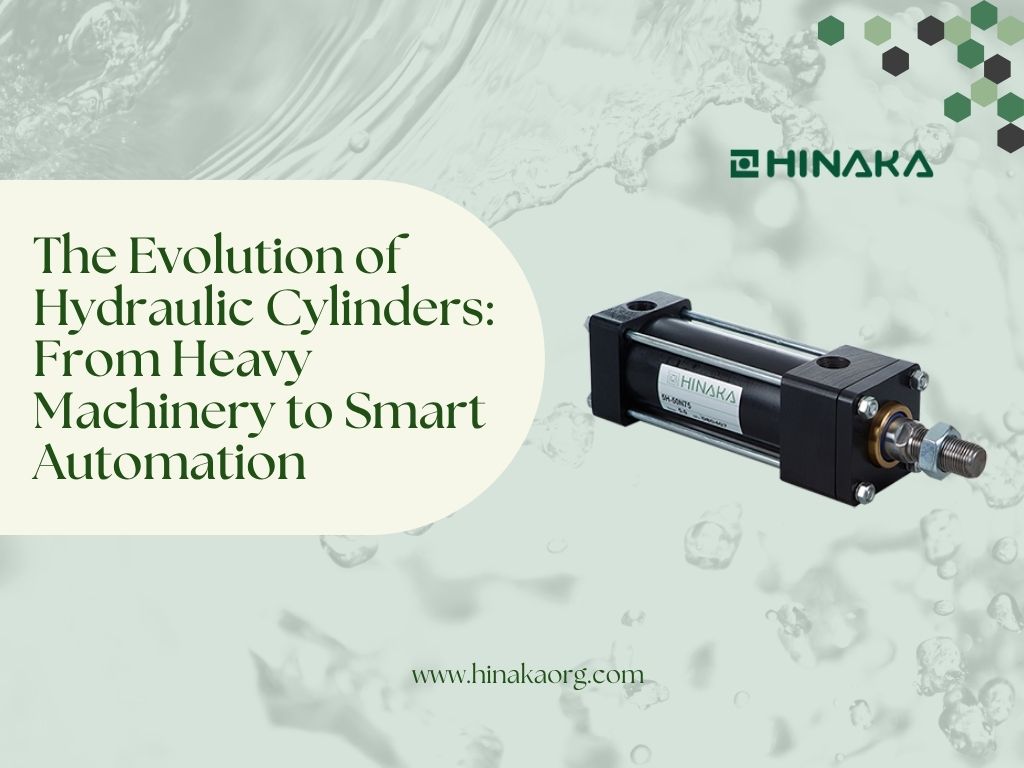
The Evolution of Hydraulic Cylinders: From Heavy Machinery to Smart Automation
2025/ 10/ 28
Introduction
Hydraulic cylinders have long been one of the most essential power transmission components in industrial machinery. For decades, they have provided the muscle behind presses, excavators, injection molding machines, and countless other types of equipment. As industries evolve toward automation, digital control, and energy efficiency, hydraulic cylinder technology has also advanced—transforming from simple linear actuators into intelligent, high-performance systems designed for precision and reliability.
As a trusted manufacturer of pneumatic and hydraulic components, HINAKA has witnessed and contributed to this transformation firsthand. From rugged heavy-duty designs to high-speed cylinders engineered for automation, the evolution of hydraulic cylinder technology reflects broader changes in industrial priorities—efficiency, sustainability, and smart integration.
1. Early Generations: Power and Durability
The earliest hydraulic cylinders were built primarily for brute strength. These units converted pressurized hydraulic fluid into linear motion, allowing heavy machines to lift, clamp, and form materials with consistent force. Found in mining, construction, and steelmaking, these cylinders emphasized power, durability, and simplicity.
Designs were often heavy, with large piston rods and thick cylinder walls made from carbon steel. Maintenance was straightforward—operators focused on oil cleanliness and seal replacement. Though limited in precision, these early hydraulic systems set the foundation for today’s high-performance actuators by proving that fluid power could outperform mechanical systems in both force density and reliability.
2. Material and Manufacturing Advances
As industrial applications diversified, so did the performance demands on hydraulic cylinders. The introduction of precision machining and surface finishing technologies in the mid-20th century dramatically improved dimensional accuracy and internal smoothness, reducing friction and extending component lifespan.
Material innovation also played a key role. Cylinder tubes began using honed steel and chrome-plated rods, which provided excellent wear and corrosion resistance. At HINAKA, for instance, medium carbon steel S45C is used for the piston rod, followed by hard chrome plating and mirror-class polishing—a process that enhances durability, prevents oil leakage, and maintains optimal surface smoothness for long-term operation.
These advancements allowed hydraulic cylinders to transition from basic power units to precision components capable of consistent, repeatable performance even under demanding conditions.
3. Compact and Specialized Designs for Industrial Automation
With the rise of factory automation in the late 20th century, manufacturers began to require more compact, energy-efficient, and application-specific cylinder designs. Instead of single, oversized units, industries moved toward customized cylinders that could fit into robotic arms, automated press systems, and specialized clamping stations.
Hydraulic cylinders evolved into numerous subtypes—tie-rod, welded, telescopic, and mill-type cylinders—each optimized for specific installation environments. Space-saving configurations and modular mounting systems became standard features, allowing seamless integration into CNC machines, presses, and automated conveyors.
Additionally, the development of high-pressure sealing systems and low-friction bearings further improved smoothness and response times, ensuring that hydraulic actuation could match the precision and speed required in automated production lines.
4. The Shift Toward Energy Efficiency and Sustainability
In modern manufacturing, energy consumption and sustainability have become key performance indicators. Traditional hydraulic systems, while powerful, were often criticized for inefficiencies and potential oil leakage. This led to the development of energy-saving cylinder designs, incorporating improvements such as:
-
Reduced internal friction through advanced seal materials
-
Lightweight construction for lower inertia and faster response
-
Improved volumetric efficiency to minimize energy loss
-
Eco-friendly hydraulic fluids compatible with advanced seal compounds
Manufacturers like HINAKA have focused on achieving high performance while minimizing environmental impact. Precision honing and polishing techniques ensure that oil leakage is nearly eliminated, and optimized sealing systems contribute to both environmental compliance and long-term cost savings.
5. Smart Hydraulic Cylinders: Integrating Sensors and Data
Today, the evolution of hydraulic cylinders is entering a new era—smart automation. By integrating sensors, controllers, and data connectivity, hydraulic systems are becoming part of the Industry 4.0 ecosystem.
Modern smart cylinders can monitor:
-
Pressure and temperature for condition tracking
-
Piston position via linear transducers or magnetostrictive sensors
-
Cycle count and stroke time for predictive maintenance
-
Oil level and contamination to prevent unexpected failures
This real-time feedback enables manufacturers to detect early signs of wear, optimize operating parameters, and extend service life. Predictive maintenance reduces unplanned downtime, while data integration enhances process visibility across the production line.
Even though pneumatic and electric actuators have gained traction in some sectors, hydraulic cylinders remain unmatched when it comes to force density and load capacity, making them indispensable in heavy-duty automation, forming machinery, and robotics that require precise motion under high loads.
6. The Future: Hybrid and Intelligent Fluid Power Systems
Looking ahead, the future of hydraulic cylinders lies in hybridization and intelligence. Engineers are exploring ways to combine hydraulic power density with electric control precision—creating electro-hydraulic actuators that can deliver both speed and accuracy.
Additive manufacturing is also influencing cylinder production, allowing lightweight, topology-optimized housings and internal passages that enhance efficiency while reducing material waste. Furthermore, advances in AI-driven monitoring and IoT connectivity will continue to push hydraulic systems toward full digital integration within smart factories.
For manufacturers seeking high reliability and control, the next generation of hydraulic cylinders will not only provide motion—but actionable intelligence.
Conclusion
The evolution of hydraulic cylinders mirrors the transformation of modern industry itself: from mechanical power to digital precision, from heavy equipment to smart automation. What began as a simple tool for linear motion has become an essential component of intelligent, energy-efficient machinery.
With decades of expertise in fluid power engineering, HINAKA continues to refine the performance, durability, and precision of hydraulic cylinders for diverse industrial needs. By combining robust materials, advanced sealing technologies, and forward-thinking design, HINAKA helps manufacturers move confidently toward the next stage of automation—where every motion counts, and every component drives greater productivity.
Recent Article
- Hydraulic Cylinder Maintenance Guide: Preventing Leaks, Corrosion, and Seal Failure
- Key Factors When Selecting High Force Pneumatic Cylinders for Automation Systems
- The Role of Hydraulic Cylinders in Precision Manufacturing and Robotics
- Comparing Air Hydraulic Unclamping Cylinders and Mechanical Clamping Systems
- Hydraulic Cylinders in Heavy-Load Automation: Designing for High Force and Long Service Life