Knowledge
AHP Patented Technology Decoded (Part 1): How the Zero-Leakage Hydraulic Directional Valve Achieves
2025/ 08/ 21
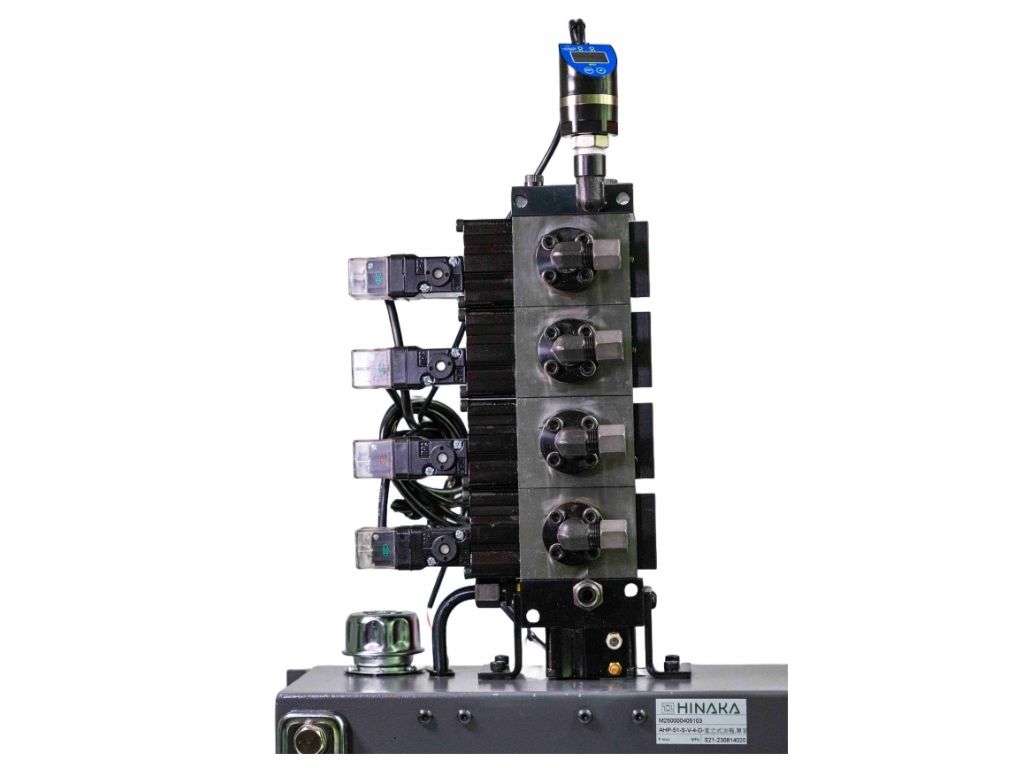
Unveil the core patent of HINAKA's AHP Air-driven Hydraulic Power Unit: the "Zero-Leakage Hydraulic Directional Valve." Learn how its truncated conical design ensures zero leakage and zero energy consumption during long-term pressure holding.
I. Introduction: The Predicament of Traditional Hydraulic Leakage and AHP's Solution
In industrial hydraulic applications, maintaining pressure is critical for many processes. However, traditional hydraulic directional valves often experience minor leakage due to worn seals or design limitations. This forces the hydraulic pump (usually driven by an electric motor) to run continuously to maintain pressure, resulting in energy waste, heat generation, and system instability. The innovation of HINAKA's AHP Air-driven Hydraulic Power Unit fundamentally solves this pain point, with its key being our exclusively developed patented "Zero-Leakage Hydraulic Directional Valve".
II. In-depth Analysis of the Patented "Zero-Leakage Hydraulic Directional Valve" Technology
HINAKA's "Zero-Leakage Hydraulic Directional Valve" (Patent No.: TWM443803U, CN202852065U) breaks through the limitations of traditional designs, achieving an almost zero-leakage pressure-holding capability.
- Core Design: The Truncated Conical Part and Its Tight Fit with the Valve Body Shoulder The core innovation of this valve lies in the unique truncated conical part on its check block. When this part fits tightly against the precise first shoulder and second shoulder inside the valve body, it completely eliminates the common gaps found in traditional valves.
- Material and Durability Advantage: Compared to rubber or Teflon gaskets in existing technologies, which are prone to leakage due to wear and tear, the AHP valve design does not require these easily deformable gaskets. The body of the check block is typically made of metal with high hardness, which prevents deformation when pressing against the shoulders, significantly enhancing durability and extending overall service life. The metal-to-metal fit also prevents impurities from getting trapped, further ensuring the sealing effect.
III. The Realization of "Zero Energy Consumption" During Static Pressure Holding
To maintain pressure, traditional hydraulic power units require the electric motor to run continuously to compensate for leakage, even during non-operational pressure holding. This results in significant energy waste and heat generation.
- Disruptive Benefit: AHP's "Zero-Leakage Hydraulic Directional Valve" fundamentally solves this problem. Since the valve itself has virtually no leakage, the system does not require the motor to continuously supply oil during pressure holding, thereby achieving static pressure holding with virtually zero energy consumption. This not only significantly reduces electricity consumption but also eliminates the heat generated from continuous operation, reducing the need for a cooling system.
- Stability Verification: Experimental data confirms that AHP can achieve stable high-pressure holding for over 168 hours, with a pressure decay rate of less than 10% during this period. This provides extreme stability and reliability for industrial applications that require long-term, precise clamping and pressure maintenance.
IV. Conclusion: Zero Leakage, Pioneering a New Chapter in Sustainable Hydraulics
The "Zero-Leakage Hydraulic Directional Valve" is the cornerstone of the AHP Air-driven Hydraulic Power Unit's exceptional energy-saving performance. It not only enhances system reliability and component lifespan but also provides a tangible solution for businesses on their path toward green manufacturing and sustainable development.
Recent Article
- Hydraulic Cylinder Maintenance Guide: Preventing Leaks, Corrosion, and Seal Failure
- Key Factors When Selecting High Force Pneumatic Cylinders for Automation Systems
- The Role of Hydraulic Cylinders in Precision Manufacturing and Robotics
- Comparing Air Hydraulic Unclamping Cylinders and Mechanical Clamping Systems
- Hydraulic Cylinders in Heavy-Load Automation: Designing for High Force and Long Service Life